
When Energy Costs Become Industrial Strategy
When Energy Costs Become Industrial Strategy Category: #Industrial Competitiveness , #Energy Markets, #Energy Transition In short: Greek industry is entering a new phase of the energy transition — one in which electricity, carbon, technology and industrial competitiveness can no longer be treated as separate questions
Eleftheria Zisarou
9/6/20269 min read

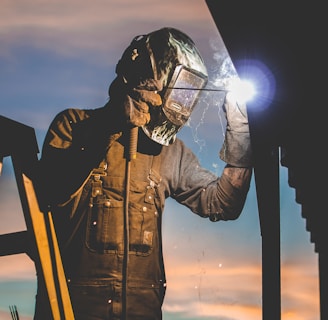
The energy transition is entering a harder phase.
For most of the past decade, the central question was how fast Europe could add renewable generation, cut emissions, and electrify its economy while now the question facing industry is more consequential: can Europe decarbonise fast enough without making its productive base structurally less competitive?
Nowhere is that question sharper than in Greece.
At the 10th Southeast Europe Energy Forum in Thessaloniki (https://www.amcham.gr/events/event/10th-southeast-europe-energy-forum-i-seef2026/), industrial leaders from companies including TITAN Group, Alumil, and MEL described the scale of the challenge facing energy-intensive production in the country. Energy costs can approach 30% of operating expenditure in some industrial activities — a share large enough to shape margins, pricing, investment decisions, and ultimately where production happens at all.
This is not, at its core, an energy-price problem. It is the opening of a different industrial equation, one in which electricity costs interact with carbon costs, carbon costs interact with trade competitiveness, renewable generation interacts with industrial procurement, artificial intelligence interacts with productivity and demand, and geopolitics reshapes the risk attached to both supply and industrial supply chains.
The energy transition is becoming industrial strategy.
Greece's competitiveness problem, in one bill
The below data make a useful starting point. In the first half of 2025, the retail electricity price for industrial consumers in Greece stood at roughly €182/MWh, against an EU average of €164/MWh, which shows an 11% gap.
More telling than the gap itself is what makes up the bill. Wholesale electricity accounts for roughly 69% of the industrial price, network costs 9%, carbon costs 10%, and taxes and levies the remaining 12%.
That composition changes where the competitiveness conversation needs to focus. Lower taxes help. A more efficient network also helps. But the largest single component is still the underlying cost of electricity itself. This means the real, long-term question runs back through generation costs, gas exposure, market design, interconnection, flexibility, storage, and how far ahead industrial consumers can actually contract their power.
Greece's power system remains unusually exposed to the link between gas and electricity prices. The European Commission notes the country has one of the highest electricity-to-gas price ratios in the EU, with gas still setting the marginal price of power much of the time. The result is a paradox. Greece has expanded renewable generation rapidly, but more low-cost renewable electricity on the system does not automatically mean an industrial consumer can access low-cost electricity when it needs it. Generation capacity and competitively priced industrial electricity are not the same thing.
A European problem, not just a Greek one
Greece's challenge sits inside a much larger European one. The IEA estimates that electricity prices for energy-intensive industry in the EU remained around twice US levels and roughly 50% above Chinese levels in 2025 and the gap has widened, not narrowed, since 2019, when EU prices ran about 50% above US levels and 20% above China's.
This is not simply an aftershock of the 2022 energy crisis. It looks increasingly like a structural cost differential — and for industries such as aluminium, cement, chemicals, paper, glass, and steel, where electricity is embedded directly in production economics, that differential sits at the centre of the problem. The European Commission identifies these energy-intensive sectors as accounting for over half of EU industrial energy consumption and around 19% of EU greenhouse-gas emissions. This is not a marginal concern; it is close to the centre of Europe's industrial transition.
Both the Commission's own research and the Joint Research Centre's bottom-up industrial models point the same way, and recent empirical work reinforces it as a study of Europe's most energy-intensive industries found a significant relationship between energy efficiency, carbon emissions, and competitiveness — treating energy productivity as an economic variable, not only an environmental one. Europe cannot assume decarbonisation and competitiveness will move together on their own. They have to be designed to.
Three variables, not one
The traditional industrial cost equation was simple: energy, labour, raw materials, and capital. The transition adds a layer companies now have to actively manage: energy cost, carbon cost, technology cost, and productivity. Those are variables that interact rather than sum neatly.
Electrifying a process can cut emissions while increasing exposure to electricity prices. Renewable procurement can reduce carbon exposure while introducing new profile, balancing, or contractual risk. Automation can reduce labour intensity while raising capital and electricity demand. A low-carbon process may become more competitive as carbon prices rise and less competitive if the electricity it depends on stays expensive.
This is why the industrial transition can't be assessed technology by technology. The relevant metric is increasingly the cost of producing the final unit of output under a given energy and carbon regime — the number that actually matters on the factory floor.
CBAM turns carbon into an economic variable
The Carbon Border Adjustment Mechanism adds a further dimension. Its logic is simple — align the carbon price on certain imported goods with the carbon cost EU producers already face but its industrial implications are not. Initial coverage spans cement, iron and steel, aluminium, fertilisers, electricity, and hydrogen, and as free ETS allowances are phased out in CBAM-covered sectors, carbon intensity becomes an economic characteristic of the product itself.
That leaves companies needing two things: an accurate figure for how much carbon is embedded in each unit of production, and confidence that the figure can be independently verified and defended. The Commission's own ETS analysis shows carbon pricing is still transmitted through the economy largely via electricity, with power and centralised heat accounting for around half of stationary ETS emissions in 2024 — meaning carbon reaches an energy-intensive producer through two channels at once: direct embedded carbon, and the carbon embedded in the electricity it consumes. For many companies, these reinforce each other.
Carbon data is becoming market infrastructure
This is why concerns raised by industrial stakeholders over the governance and consistency of CO₂ audits deserve more attention than they typically get. When carbon was purely a reporting metric, a difference in measurement methodology was an accounting footnote. Once carbon carries a monetary value, the same discrepancy can move reported emissions intensity, CBAM exposure, product-level competitiveness, supplier comparisons, investment decisions — and a company's commercial position internationally.
Decarbonisation, in other words, now requires more than a carbon price. It requires confidence in the data behind it — an underappreciated dimension of the transition, and one Europe is arguably under-investing in relative to the market it is building on top of it.
PPAs are becoming industrial strategy, not just sustainability policy
The same logic extends to renewable procurement. Power Purchase Agreements have traditionally been framed as a route to renewable electricity and sustainability credentials. For energy-intensive industry, their strategic role is potentially far larger — a well-structured, long-term PPA can offer price visibility, support new renewable build, and reduce exposure to wholesale volatility. But a PPA does not automatically mean cheap electricity; its economics depend on contract structure, generation profile, capture prices, balancing exposure, and the buyer's own load profile.
Recent academic work bears this out. A 2025 study in the European Journal of Operational Research built a scenario-based approach to valuing corporate PPAs, showing that value depends on the relationship between the contracted price and the market, or "capture," value of the underlying generation. A related study comparing physical and virtual PPA structures identified a genuine trade-off between expected procurement cost and cash-flow volatility — the contract structure itself materially changes the risk a buyer is taking on.
The right question for Greek industry, then, isn't should we sign PPAs — it's under which market conditions, contract structures, and load profiles does a PPA actually improve competitiveness? That's a far more useful question, and far harder to answer without proper analysis.
Renewable potential is not the same as industrial value
Greece holds one of the more significant renewable-energy opportunities in Southeast Europe. But renewable generation alone doesn't resolve industrial competitiveness. There are at least four further conditions have to hold: availability, electricity present when industry needs it; affordability, a delivered cost competitive with alternative production locations; predictability, enough visibility for long-term investment decisions; and infrastructure, grids, interconnection, storage, and flexibility capable of actually connecting supply to industrial demand.
EU policy is beginning to reflect this. The Commission's Affordable Energy Action Plan (https://eur-lex.europa.eu/legal-content/EN/TXT/?uri=celex:52025DC0079) explicitly flags energy-intensive industries as exposed, since energy costs can represent a significant share of production cost and shape investment decisions, and the Clean Industrial Deal State Aid Framework allows member states to support electricity costs for energy-intensive users and industrial energy transformation. The policy question is shifting — from whether Europe should shield industry from the transition, to how the transition itself becomes a source of industrial competitiveness.
Horizon Europe is asking the same question
That shift is visible in the direction of EU-funded research. The Horizon Europe INCENTIVISE5.0 (https://cordis.europa.eu/project/id/101293628) project frames energy-intensive industry around the combined pressures of decarbonisation, resource constraints, productivity, and competitiveness, and is building tools to assess industrial transformation through resilience and value creation, not financial metrics alone. TRANSIENCE (https://www.transience.eu/) examines how decarbonisation, circularity, and resource efficiency interact across European industry, on the premise that current modelling approaches don't yet capture these interactions well. ZEnITh (https://european-aluminium.eu/projets/zenith-zero-emissions-industrial-technologies/) treats the economic feasibility and competitiveness of low-carbon industrial heat as a central deployment barrier, not a secondary concern.
None of these projects offers a single answer. Together, they mark where the research frontier is moving — away from which technology is cleanest, and toward which combination of technology, energy prices, infrastructure, financing, regulation, and process produces the most competitive low-carbon outcome. That is a fundamentally different analytical problem, and one the sector is only beginning to build the tools for.
AI: more productivity, more electricity demand
A further dimension is now entering the competitiveness discussion. Artificial intelligence and robotics are changing production economics (predictive maintenance, process optimisation, automated quality control, energy optimisation, reduced downtime, better planning, higher labour productivity). The open question is whether these gains can offset the structural cost disadvantages European producers already face.
But AI also changes the energy side of the equation. More digital production means more computing infrastructure. Data centres are becoming a genuine new source of electricity demand even as industrial facilities themselves grow more digital. The result is a feedback loop worth naming plainly: more AI drives more electricity demand, which increases the need for generation and grid capacity, which raises the value of low-cost electricity, which strengthens the incentive to use AI to optimise electricity use in the first place. The energy and digital transitions are no longer separable — they are converging into one industrial transformation.
Greece's energy-hub ambition needs an industrial test
Greece is deepening its role in the regional energy system — the expansion of the Vertical Corridor into North Macedonia and Serbia, announced in Thessaloniki during SEEF2026, is a clear signal of the country's growing part in regional energy connectivity and diversification.
The strategic opportunity is real. But the success of that hub strategy should be measured by more than the volume of energy crossing Greek territory. There's a second, harder test: does Greece's position in the regional system actually improve the competitiveness of its own productive economy? That means asking whether the new infrastructure lowers system costs, improves reliability, enables more competitive renewable procurement, expands cross-border trading, supports industrial electrification, and creates better conditions for long-term industrial investment. An energy hub that strengthens regional security while leaving domestic industry structurally disadvantaged on cost is only half a success.
The missing metric: cost per unit of competitive output
All of this points toward a different way of framing the transition. Instead of asking only how many renewable gigawatts are being installed, ask what that translates to in industrial electricity cost. Instead of asking only how many tonnes of CO₂ are being cut, ask at what cost per tonne — and what that does to product competitiveness. Instead of asking only how many companies have signed PPAs, ask what the delivered, risk-adjusted cost of electricity actually is under those contracts. Instead of asking how much AI is being deployed, ask how much additional productivity it generates per unit of energy and capital invested.
That's the analytical shift the next phase of the transition demands — from technology metrics to economic outcomes.
The next phase will be won on competitiveness
The evidence points consistently in one direction. The European Commission is placing competitiveness alongside decarbonisation at the centre of the Clean Industrial Deal (https://ec.europa.eu/commission/presscorner/detail/en/ip_25_550). The IEA (https://www.iea.org/reports/renewables-for-industry) continues to flag high electricity prices as a major pressure on European energy-intensive industry. European research programmes are increasingly built around competitive decarbonisation, industrial transformation, and productivity. Academic research is showing that energy efficiency, carbon exposure, and procurement structure materially shape industrial economics. And Greece's own numbers show industrial electricity prices still running above the EU average, with electricity carrying a persistent premium over gas.
For Greece, the opportunity is to combine renewable resources, regional infrastructure, geography, and growing digital capability into a genuinely more competitive industrial energy system. The risk is that high electricity costs, rising carbon exposure, and fragmented procurement erode the economics of production faster than productivity and technology can compensate.
Research and data sources
European Commission, 2026 Country Report: Greece — industrial electricity price (H1 2025), EU comparison, bill composition, electricity-to-gas price differential
IEA, Electricity 2026 — comparison of EU, US, and China/India energy-intensive industry electricity prices, 2025
IEA, Electricity 2025 / Mid-Year Update 2025 — longer-term comparison showing the EU disadvantage widening since 2019
European Commission, ETS economic analysis — interaction between carbon pricing, electricity prices, and the transition from free allocation to CBAM
European Commission / Joint Research Centre — research on energy-intensive industries, technology, efficiency, emissions, and competitiveness
Horizon Europe — INCENTIVISE5.0, TRANSIENCE, ZEnITh
Qorbanian, Löhndorf & Wozabal, European Journal of Operational Research (2025) — quantitative valuation of corporate PPAs
Mohseni Taheri, Nadarajah & Trivella, European Journal of Operational Research (2025) — physical vs. virtual PPAs, cost/risk trade-offs
Zuoza & Pilinkienė, Energies (2021) — energy efficiency, carbon emissions, and competitiveness in Europe's energy-intensive industries
European Commission, Understanding the renewables power purchase agreements market (2026) — PPA market barriers, pricing, risk, liquidity, grid access, standardisation


Energy Intelligence- Energy Advisory
Independent technical research, analysis and advisory for the energy transition.
Practice
Home
Services
Research
Projects
Articles
About
Direct Contact
info@energy-intelligence.gr
Thessalia Greece
Direct inquiry desk: +306996136648
© 2026 Energy Intelligence-Independent technical analysis and advisory for energy transition capital.
Empirical Research